adu
ADU Cost in California: Construction, Site Work, Permits, and Utility Connections
ADU cost in California ranges widely depending on type, size, and location. Learn what drives construction, site work, permit, and utility budgets before you break ground.
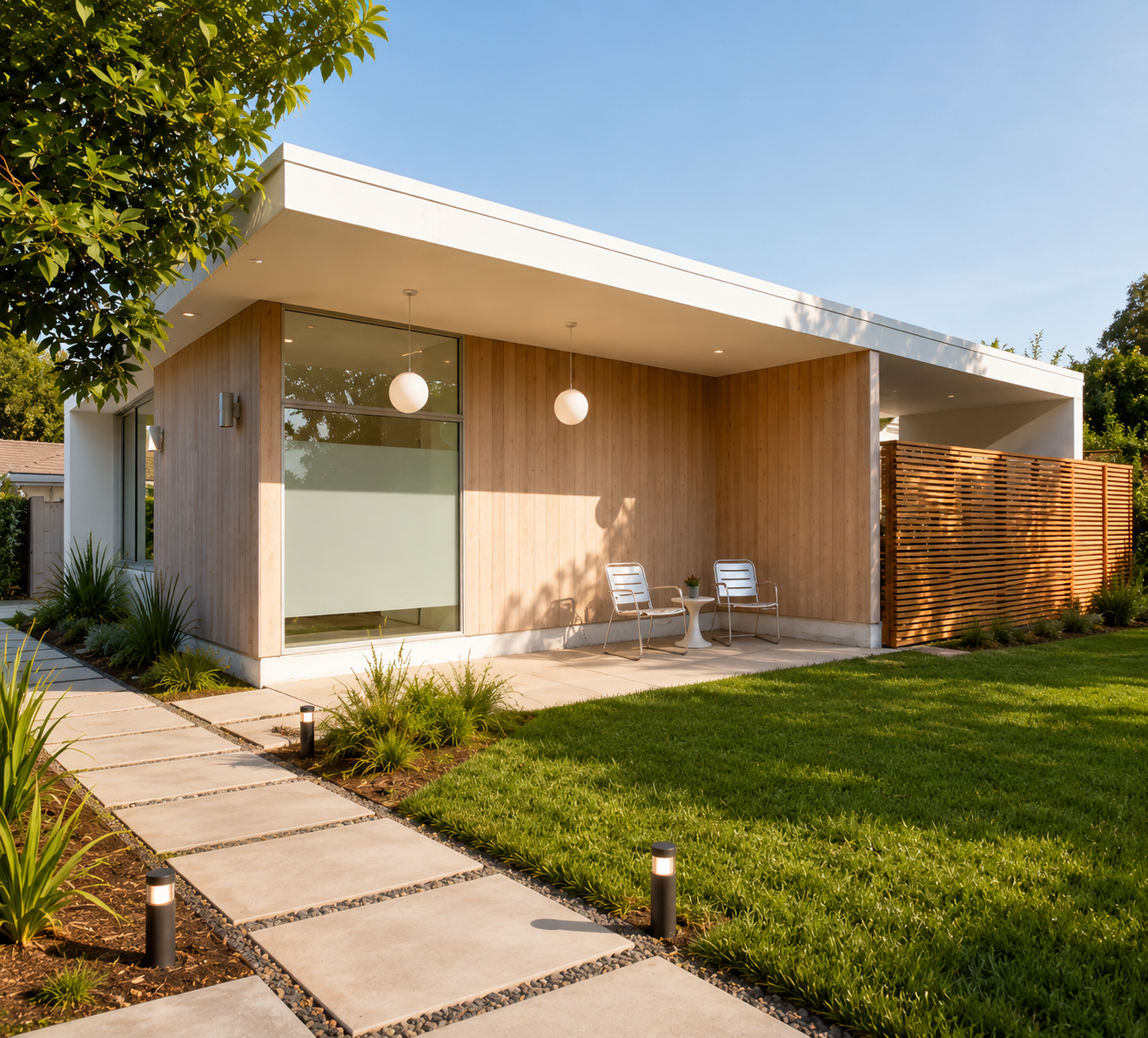
ADU cost in California typically falls between $150,000 and $400,000 for a newly constructed detached unit, though garage conversions and interior conversions can come in considerably lower. That wide range reflects real differences in ADU type, square footage, site conditions, local permit fees, and whether new utility laterals are required. Understanding each cost category before you engage a contractor helps you build a realistic budget and avoid mid-project surprises.
What Drives ADU Cost in California
Several variables move the needle on total project cost more than any single line item. The most influential factors are:
- ADU type. A detached, ground-up unit costs the most. A garage conversion or junior ADU (JADU) that reuses existing structure and systems costs significantly less.
- Square footage. Per-square-foot construction costs in California generally run higher than national averages due to labor markets, Title 24 energy compliance requirements, and seismic engineering standards.
- Site conditions. Sloped lots, poor soil bearing capacity, or limited access for equipment and deliveries add to grading, foundation, and logistics costs.
- Jurisdiction. Permit fees, school fees (where applicable), and plan-check timelines vary by city and county. Los Angeles, San Diego, and Orange County each have their own fee schedules.
- Utility infrastructure. If the property lacks capacity on its water, sewer, or electrical service, new laterals or panel upgrades can add tens of thousands of dollars to the project.
Projects like the Fullerton Custom Accessory Dwelling Unit and the Loma Custom ADU in Temple City illustrate how site-specific decisions shape the final scope and budget of each build.
Construction Cost Breakdown by ADU Type
Breaking total cost into categories gives you a clearer view of where dollars go and where design choices create trade-offs.
Detached New-Construction ADU
A detached ADU built from the ground up is the most expensive option. Hard construction costs—framing, roofing, insulation, windows, exterior finishes, interior finishes, mechanical, electrical, and plumbing—typically range from $200 to $350+ per square foot in Southern California. A 600-square-foot unit at $250 per square foot carries $150,000 in hard costs alone, before site work, permits, design fees, or utility connections are added.
Garage Conversion ADU
Converting an attached or detached garage into living space reuses the existing foundation and shell, which reduces structural costs. However, garage conversions still require insulation upgrades, a full bathroom rough-in, HVAC, Title 24 compliance, and often window or door alterations to meet egress and natural light requirements. All-in costs for a garage conversion commonly range from $80,000 to $180,000 depending on the garage's current condition and finish level desired. Our ADU Construction & Garage Conversion service covers both paths.
Junior ADU (JADU)
A JADU is carved out of existing primary residence square footage—often a bedroom suite with a kitchenette added—and is capped at 500 square feet under California law. Because it reuses finished space and typically shares utilities with the primary home, JADUs represent the lowest entry point, often in the $30,000 to $80,000 range, though high-end finishes or complex plumbing relocations push costs up.
Site Work and Foundation Costs
Site work is frequently underestimated by homeowners pricing an ADU for the first time. Common line items include:
- Grading and drainage. Sloped or uneven lots require cut-and-fill earthwork to create a level building pad and ensure stormwater drains away from both the ADU and the primary residence.
- Foundation type. Flat, stable lots may qualify for a slab-on-grade foundation, the most economical option. Hillside sites often require a raised foundation, caissons, or a post-and-pier system, each of which adds cost and engineering time.
- Access and demolition. If an existing structure (old shed, detached garage) must be removed, or if a concrete driveway must be demolished and replaced to route utilities, those costs appear in site work.
- Landscaping restoration. Trenching for utilities and equipment staging disturbs existing landscaping. Budgeting for restoration—sod, irrigation repair, hardscape patching—prevents a last-minute surprise.
The Monrovia Multi-Unit ADU Conversion and the Lerona Custom ADU Renovation in Rowland Heights both involved site-specific decisions that shaped the final construction approach.
Permit Fees and Soft Costs
California's ADU reform legislation—most recently updated through AB 2221 and SB 897—has reduced some barriers, but permit fees and soft costs still represent a meaningful share of total project cost. Typical categories include:
- Architectural and engineering design fees. Expect to pay 8–15% of hard construction costs for a licensed designer or architect and a structural engineer, depending on ADU complexity.
- Building permit fees. Many California jurisdictions now cap ADU permit fees for units under 750 square feet, but larger units are subject to standard fee schedules, which vary significantly by city.
- School impact fees. State law limits school fees for ADUs under 500 square feet to zero and caps fees for larger ADUs, but verify the current schedule with your local school district.
- Plan check and inspection fees. Separate from the building permit, plan check fees cover staff review time. Expedited review is available in some jurisdictions for an additional fee.
- Title 24 energy compliance report. A licensed energy consultant prepares this document as part of the permit submittal; it typically costs $500–$1,500 depending on ADU size.
Utility Connection Costs
Utility connections are among the most variable and most frequently surprising costs in an ADU project. Key considerations:
Water and Sewer
Some parcels can add an ADU on the existing water and sewer service without upgrading the lateral. Others—particularly those with older or undersized laterals, or those served by private septic—require a new or upsized connection. Connection fees paid to the water district or sanitation authority can range from a few thousand dollars to over $20,000 depending on the jurisdiction and meter size required.
Electrical Service
A detached ADU typically requires its own subpanel or, in some configurations, a new service connection. If the main panel serving the primary home lacks capacity, a panel upgrade may be required before the ADU can be connected. Panel upgrades in California currently run $3,000 to $8,000 or more depending on amperage and utility company requirements. Solar and battery storage requirements under Title 24 for newly constructed units add another layer of planning.
Gas
Many new ADUs are designed as all-electric to comply with local reach codes and simplify permitting in jurisdictions that have adopted building electrification ordinances. Where gas is planned, a new lateral or extension from the primary home's service adds cost and requires utility coordination.
How to Use This Information When Budgeting
A realistic ADU budget in California accounts for all five cost categories: hard construction, site work, soft costs (design and permits), utility connections, and a contingency reserve. Most experienced contractors recommend a contingency of 10–15% on top of the contracted scope to cover unforeseen conditions discovered during demolition or excavation. Rushing past contingency planning is one of the most common reasons ADU projects exceed initial expectations.
If you are evaluating a garage conversion versus a detached build, the lower upfront cost of conversion must be weighed against limitations on rental income potential, ceiling height, and long-term usability. Our team works across Southern California—from Torrance to Carlsbad—and can help you compare options for your specific property. Learn more about our approach through the ADU Construction Services in Southern California overview, or explore the Detached ADU Builder in Torrance and ADU & Garage Conversion Contractor in Carlsbad pages for location-specific context.
Sources
References and further reading
- California Department of Housing and Community Development – ADU Handbook
- AB 2221 – Accessory Dwelling Units (California Legislative Information)
- SB 897 – Accessory Dwelling Units (California Legislative Information)
- California Energy Commission – Title 24 Building Energy Efficiency Standards
- City of Los Angeles – ADU Standard Plan Program
- UC Berkeley Terner Center for Housing Innovation – Costs of Developing ADUs in California
Frequently Asked Questions
Planning your construction project
What is the average ADU cost in California?+
A newly constructed detached ADU in California typically costs between $150,000 and $400,000 all-in, depending on size, location, site conditions, and finish level. Garage conversions generally range from $80,000 to $180,000, while junior ADUs (JADUs) created within existing living space can come in at $30,000 to $80,000. These ranges include hard construction, site work, design fees, permits, and utility connections but will vary by jurisdiction and specific project scope.
Are ADU permit fees capped in California?+
State law limits certain ADU permit fees. For owner-occupied properties, connection fees and capacity charges for ADUs under 750 square feet were restricted under prior legislation, and subsequent laws have continued to refine these limits. However, fee structures vary by city and utility district, and some fees—such as school impact fees for ADUs over 500 square feet—still apply. Always request a fee estimate from your local building department early in the planning process.
Do I need a separate utility meter for my ADU?+
California law allows ADUs to share utility services with the primary residence, which avoids new connection fees. However, some homeowners prefer separate metering to independently bill a tenant or simplify future financing. Separate metering requires approval from the local utility and usually involves an additional meter installation fee. Your contractor and the local utility company can help you evaluate which approach makes sense for your property.
How long does it take to permit an ADU in California?+
State law requires local agencies to approve or deny ADU permit applications within 60 days of receiving a complete application. In practice, permit timelines vary: some jurisdictions with pre-approved standard plans can move faster, while others with high application volume or complex projects take longer. Design and plan preparation typically adds 4–10 weeks before the permit application is even submitted, so total pre-construction time from design start to permit issuance commonly runs 3–6 months.
What is the most affordable ADU type in California?+
A junior ADU (JADU) created within the existing square footage of the primary home is typically the most affordable option because it does not require a new foundation, new exterior structure, or separate utility connections. A garage conversion is the next most affordable option. Detached, ground-up construction offers the most flexibility and highest rental value potential but carries the highest upfront cost.
Can I build an ADU on a sloped lot in California?+
Yes, ADUs can be built on sloped lots, but hillside sites increase site work and foundation costs. Depending on the slope, a project may require significant grading, retaining walls, a pier-and-grade-beam foundation, or a raised floor system. Geotechnical (soils) reports are often required for sloped sites, adding to soft costs. A site visit by a contractor and a civil or structural engineer early in planning is important for accurately scoping hillside ADU projects.
adu
Not Sure What to Budget for Your ADU?
Every property is different. If you're trying to understand what a detached ADU, garage conversion, or JADU might realistically cost on your specific lot in Southern California, a short conversation with our team can help you identify the key variables before you commit to a design or a number. We're happy to walk through your site, your goals, and the cost categories that matter most for your
What We Build


